About Time
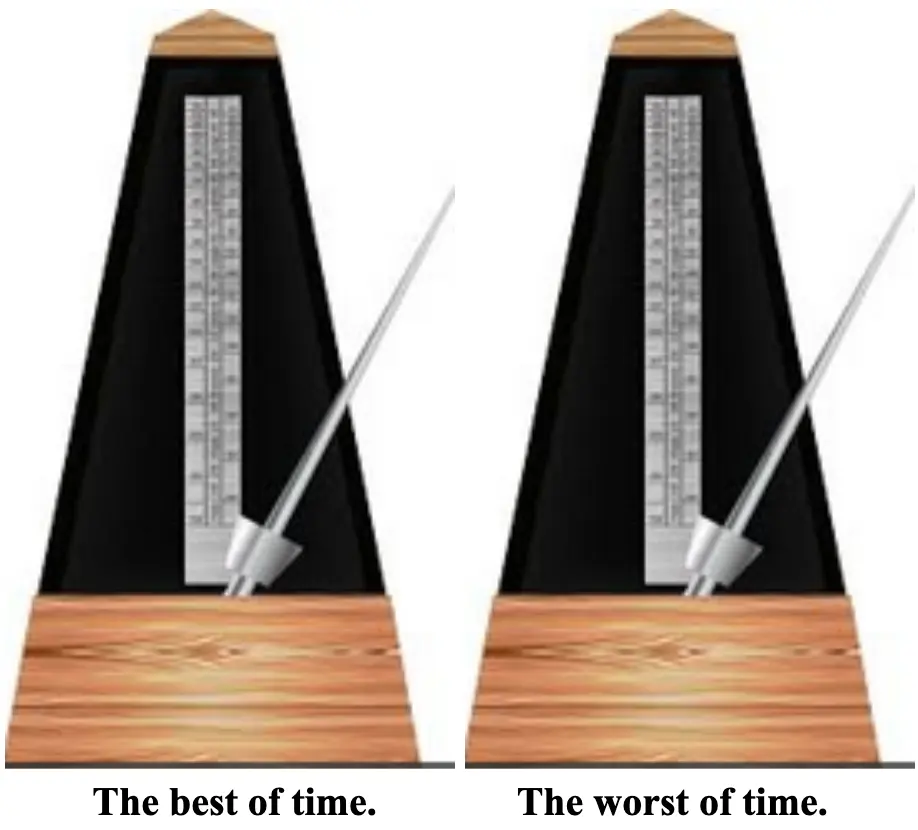
I once read a very perceptive article by Scott Cantrell in the Dallas Morning News. Mr. Cantrell bemoaned what he perceived as the dogged adherence to the metronome by young American-trained conductors. He wrote: They're more apt to be metronomes, efficient but heedless of musical shape, harmonic rhythm, direction. Digital, in the bad sense. They seem unaware that music, like our heartbeats and respiration, needs a certain amount of freedom within a well-ordered overview.
Sadly, this article no longer seems to be accessible, but it contained many points that resonate with orchestral musicians. If I have any bone to pick at all with Mr. Cantrell's observations, it's only that my experience has been that the conceptual limitations of conductors are not necessarily restricted either to those who are American-trained or to those who are young.
The central issue is rhythm, and understanding how rhythm works in a musical context. Too often these days, a good sense of rhythm is equated with being able to keep a metronomic beat, when the opposite is true. Good rhythm means having an understanding of the rhythmic ebb and flow of musical phrases within the broader scope of an entire movement and an entire composition. The paradox is that even though the music must have a sense of a regular pulse, within that pulse there has to be constant give-and-take based upon the direction of the melodic phrase, the harmony, the more foreground rhythms, the density of the orchestration, etc. Those conductors who disregard those factors do so at the peril of making the music sound prefabricated and emotionless. They miss the essential purpose of music: to convey a subjective, not mathematical, message.
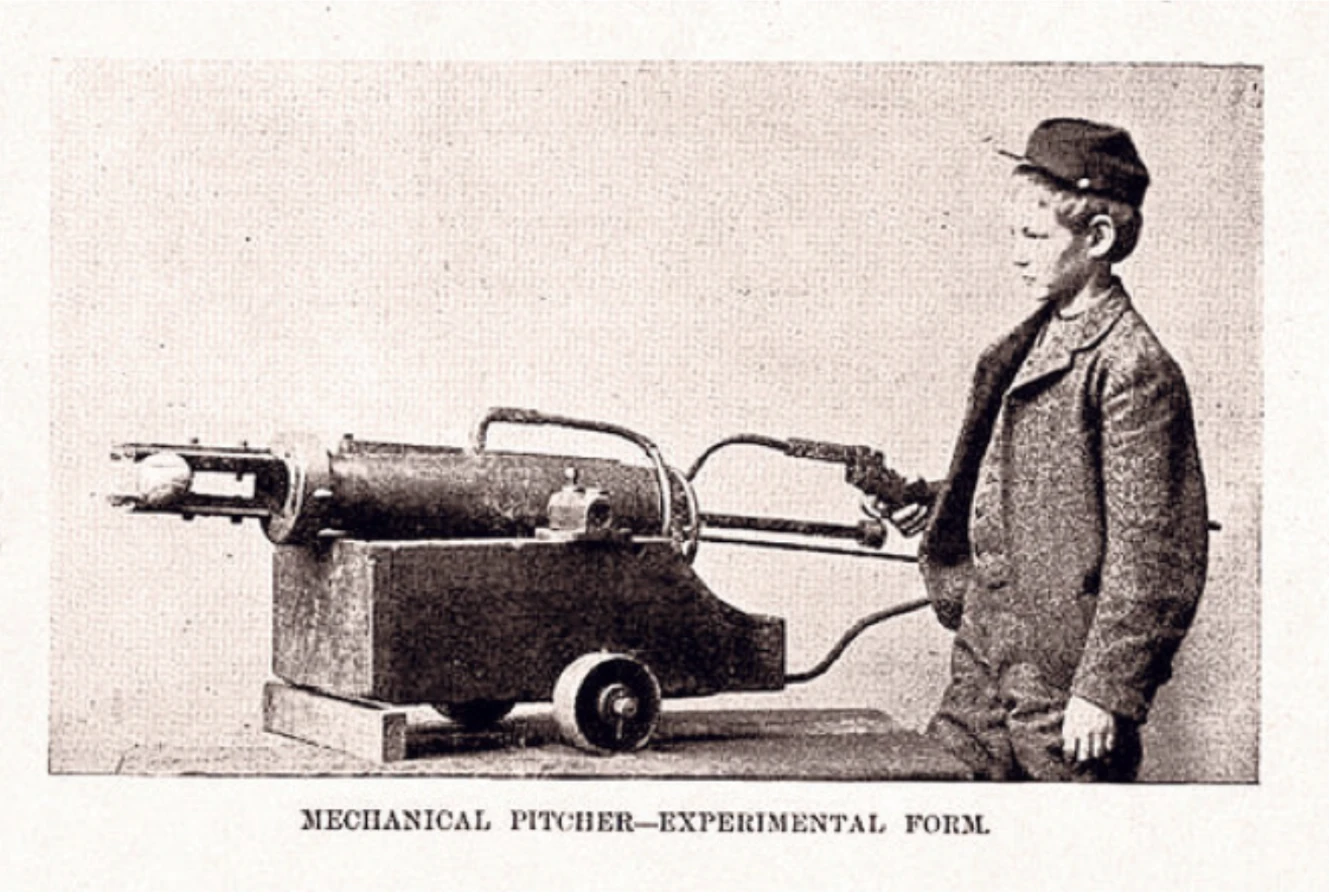
Don't get me wrong. I often practice with a metronome and insist that my students do so as well. Why? It's excellent discipline. You can tell immediately when you're rushing those Mozartean 16th notes or dragging that lush Tchaikovsky melody into the ground. Once you've corrected your own internal rhythmic inaccuracies and you're comfortable with the regular pulse of the music is the musical starting point. A mechanical pitching machine might help you to hit a baseball in a batting cage, but it doesn't teach you a damn thing about what to do when you're at the plate in the ninth inning, your team is down by a run, and there are men on first and second with one out. Likewise, the metronome is a tool. It's not music.
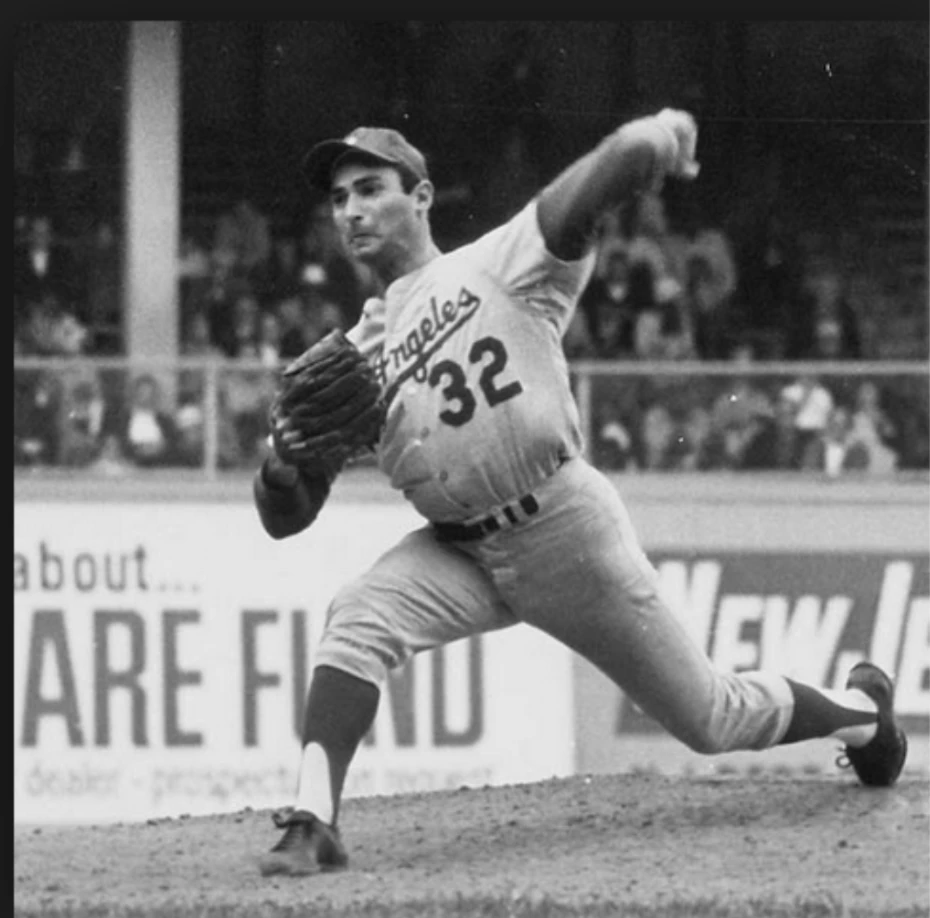 Sandy Koufax, human pitcher.
Why is this such a difficult concept for so many conductors to embrace? Part of it is historical, and we have several luminaries to thank (or pillory) for that legacy. First is Beethoven who, with his affinity for novel gadgets, took special delight in a device patented in 1815 by Johann Nepomuk Maelzel called a metronome. More or less an upside-down pendulum with a counterweight to adjust its speed, it enabled musicians with poor rhythm–of which there were many–to hone their skills.
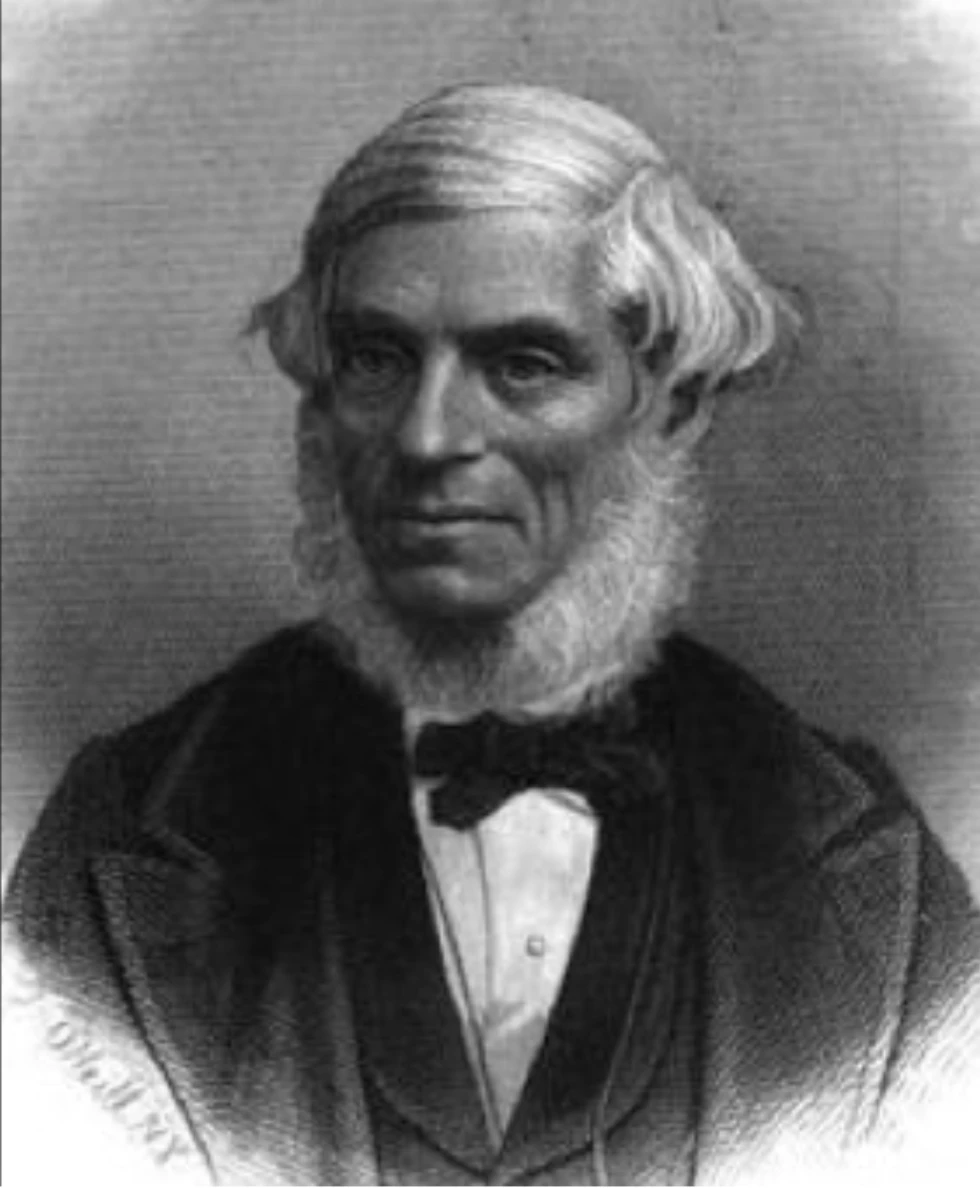 Johann Nepomuk Maelzel, Patron Saint of Misguided Musicians
Beethoven was so taken with the metronome that he decided to retroactively indicate the tempos for much of his music, notwithstanding his pesky hearing problem. There are two basic questions raised by these indications: 1) are they the Gospel? and 2) Does this mean that, even if they are, a tempo must remain unchanged throughout an entire movement? I would answer with an emphatic "No" to both questions. Part of my answer is that the device itself was not precise, and like the watches from my childhood, would slow down and have to be frequently rewound. Another part of the answer is that it is musically simplistic to assume that a march-like first theme and an andante cantabile second theme are somehow legally required to have the same metronome marking. And look at the beginning of the last movement of his Ninth Symphony. If any conductor were to dare play that according to Beethoven's hyper-frantic metronome marking, the entire string bass section would have him drawn and quartered. Yet there have been conductors who have answered those two questions otherwise; who have equated improvements in technology from the hand-wound, to the electric, to the electronic, to the digital, metronome; to bolster their faith in blind allegiance to an inexorable beat. Which is one reason I stepped away from full-time orchestra playing.
Though after Beethoven it became almost customary for a composer to indicate metronome markings to indicate tempos, before Beethoven, no one could because the tool hadn't been invented. So, to play Bach metronomically is essentially a historic contradiction. Sadly, too many musicians have tried to prove that wrong. Flexibility in rhythm was the true standard. Even a conservative, old fuddy-duddy like Leopold Mozart wrote about how a pianist's right hand should be rhythmically free, lining up with the left hand only on downbeats. Why don't more historically informed musicians these days give that a try?
In the 20th century, two giants of music, the composer, Igor Stravinsky, and the conductor, Arturo Toscanini, brought the notion of motoric rhythm to the forefront of music-making so powerfully that their influence still affects us a century later. I think there are important things to remember that make them exceptions rather than the rule: First, both Stravinsky's music and Toscanini's conducting were in large part reactions to the excesses of late 19th century Romanticism, when tonality and rhythm and interpretations were stretched farther than Coney Island's famous saltwater taffy. Certainly, precision was the name of their game…partly. But another part was intensity. Another part was passion. And another part was "I am taking my own path, doing this my own way." Playing metronomically is the antithesis of that conviction.
So young conductors who find the metronome their safe haven are missing the point if they think they're emulating the great tradition laid down by these illustrious predecessors. Good rhythm means not being metronomic. It means understanding the underlying flow of the music and then having the courage of one's musical convictions. As Beethoven said, To play without passion is inexcusable.



Discussion
Leave a comment